Amir Brooks · 28 October 2026
Dunlow Stargazers Organize Public Viewing Nights to Track Seasonal Sky Changes
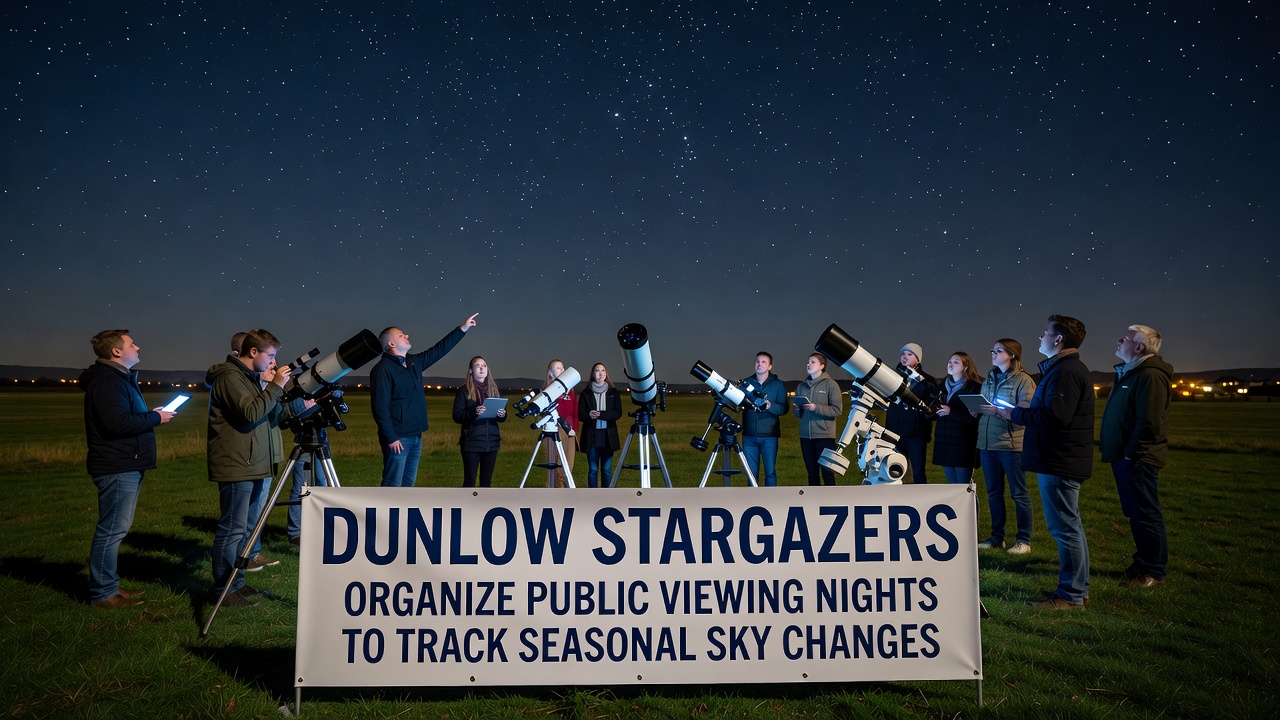
The Dunlow Stargazers have launched a series of public viewing nights designed to let residents observe how constellations and planetary positions shift with the seasons, and these events bring structured opportunities for sky monitoring that combine amateur equipment with scheduled observation windows. Organizers coordinate sessions at fixed rural sites outside town limits where light pollution stays minimal, while participants bring portable telescopes, binoculars, and digital sky apps to log visible changes over successive months.
Seasonal Shifts in the Night Sky
Seasonal sky patterns follow predictable cycles driven by Earth's orbit around the Sun, so observers in the northern hemisphere watch summer constellations such as Cygnus and Lyra give way to autumn groupings like Pegasus and Andromeda as October arrives each year. Data from long-term astronomical records show that the same stars rise earlier each evening and that planets such as Jupiter and Saturn reach opposition at different times, which creates distinct viewing windows that the Dunlow group schedules around these natural movements. In October 2026 the club plans multiple sessions timed for the appearance of the Orionid meteor shower and the early rise of winter stars, allowing attendees to record hourly counts and note color variations in brighter objects.
Club members prepare detailed sky charts ahead of each night so newcomers receive guidance on locating reference stars, and they set up comparison grids that track how the celestial equator tilts relative to local horizons. Equipment checks include verification of telescope collimation and filter selection for lunar or planetary targets, while volunteers maintain logs that compile timestamps, weather conditions, and object altitudes for later cross-reference with published ephemerides.
Community Participation and Data Collection
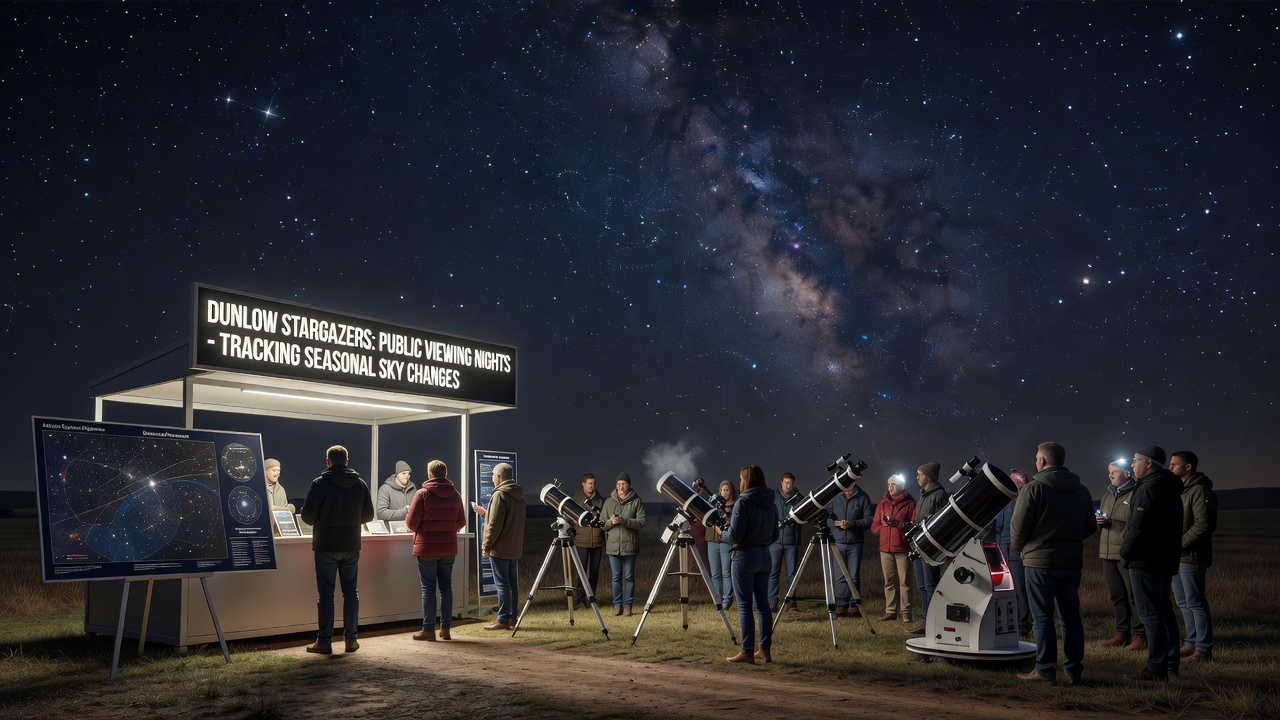
Attendance at the viewing nights has grown steadily since the first sessions began, with families, students, and local photographers joining regular members to practice astrophotography techniques that capture the same sky sectors across different dates. Researchers at regional universities have noted that citizen-collected observations of variable stars and satellite passes can supplement professional surveys when participants follow standardized reporting formats, and the Dunlow group adopted templates aligned with those used by international networks. Sessions run from dusk until late evening, with breaks for hot drinks and short talks on upcoming conjunctions or eclipses that help maintain engagement while data entry continues in real time.
Weather contingencies receive advance attention so that clear-night forecasts from meteorological services trigger final confirmations, and backup indoor workshops cover topics such as celestial coordinate systems when clouds intervene. The club maintains an online calendar that lists exact start times, required gear, and parking details, which reduces last-minute confusion and encourages repeat visits from people who want to follow specific objects through their seasonal arcs.
Equipment and Observation Techniques
Telescopes range from small refractors suited for wide-field views of star clusters to larger Dobsonians that resolve planetary details, and participants learn to balance aperture size against portability for the walk from parking areas to observation pads. Red-filtered flashlights preserve night vision during navigation between stations, while apps connected to GPS provide precise azimuth and altitude readouts that match printed finder charts. Those who record images upload files to a shared repository where timestamps allow later alignment with orbital models published by space agencies.
According to resources available through NASA Solar System Exploration, planetary visibility windows shift by roughly two hours earlier each month, which explains why the Dunlow schedule places Saturn viewing in early evening slots during autumn months. The European Southern Observatory also supplies public data sets that list expected magnitudes and positions, and several club members cross-check their notes against these references to verify accuracy before submitting summaries.
Future Sessions and Record Keeping
Plans for the remainder of 2026 include additional nights dedicated to the Geminid meteor shower in December and the reappearance of Venus as an evening object, with each event building cumulative records that document how local sky conditions interact wth broader celestial mechanics. Volunteers rotate responsibilities for equipment transport and site setup, which keeps operational overhead low while ensuring consistent coverage across the calendar year.
Conclusion
The Dunlow Stargazers continue to expand their public viewing program by aligning session dates with documented seasonal transitions, and the resulting data sets plus community involvement demonstrate how coordinated amateur efforts can contribute measurable records of sky changes throughout the year. Ongoing coordination with established astronomical resources helps maintain the accuracy of observations while the open format invites broader participation in tracking these predictable yet visually striking patterns.