Sam Long · 14 October 2026
Electric Vehicle Charging Stations Multiply Across Dunlow Neighborhoods
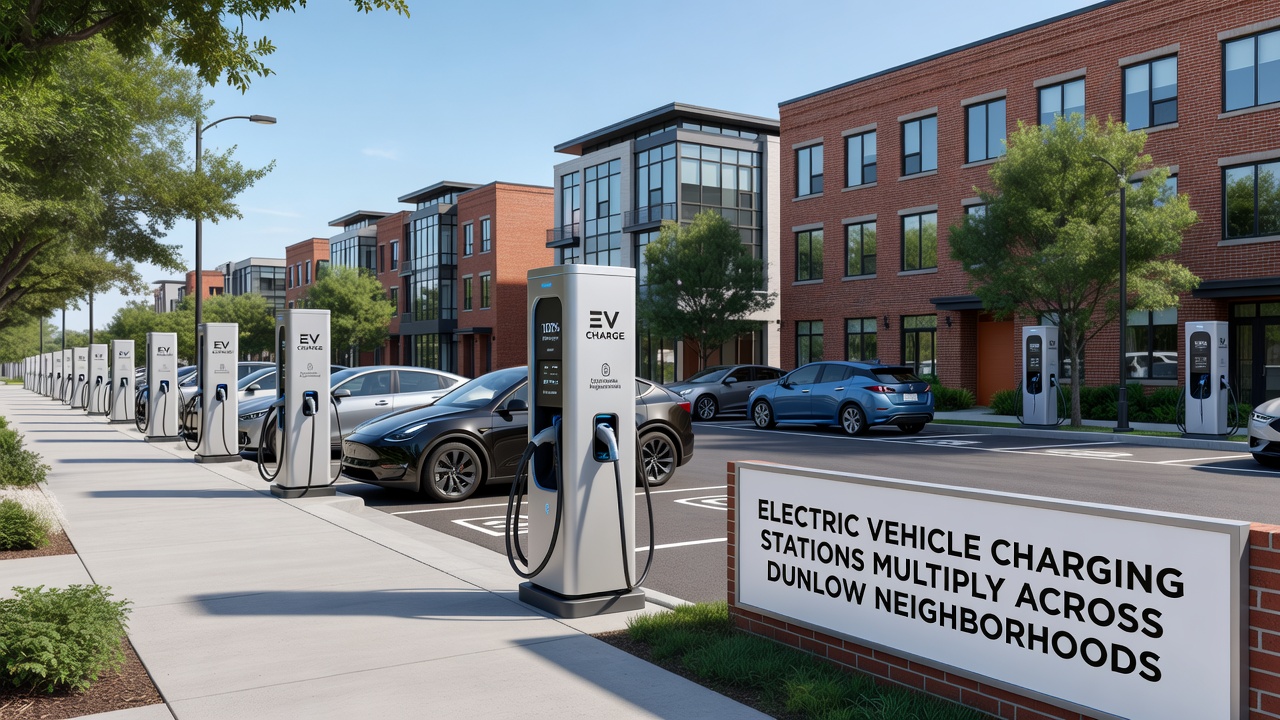
Charging infrastructure for electric vehicles has expanded steadily through Dunlow neighborhoods over the past several months, with new stations appearing in both residential zones and mixed-use areas. Local records show that installations began accelerating in early 2026, driven by partnerships between municipal planners and private energy providers, while data from regional transport surveys indicates that electric vehicle registrations in the area rose by 28 percent between January and September of that year.
Expansion Patterns in Key Districts
Stations now cluster along Maple Grove and Elmwood corridors, where crews completed 12 dual-port units by late summer, and additional units have gone live near the old rail line that borders the south side of town. Observers note that these placements follow population density maps compiled by the Dunlow planning office, which identified gaps in coverage after reviewing permit applications from the previous two years. Builders have also added level-two chargers at three apartment complexes on the east edge, each site receiving four units connected to upgraded transformers that handle simultaneous draws without straining the local grid.
Community workshops held in August allowed residents to review proposed locations, and feedback led to adjustments that shifted two planned sites away from narrow side streets. Figures released by the county energy board reveal that 47 public charging points now operate within Dunlow limits, up from 19 at the start of 2025, and usage logs show average session times of 42 minutes during weekday evenings.
Infrastructure Upgrades and Funding Sources
Power companies coordinated with the Dunlow utility district to reinforce feeder lines serving the new stations, a step that required replacing older underground cables along two blocks of Cedar Avenue. Funding came through a mix of state grants and utility rebates, with the largest share allocated from a federal program that supports zero-emission transport corridors. Engineers completed the cable work in September, and testing confirmed stable voltage delivery even when multiple vehicles charge at peak hours.
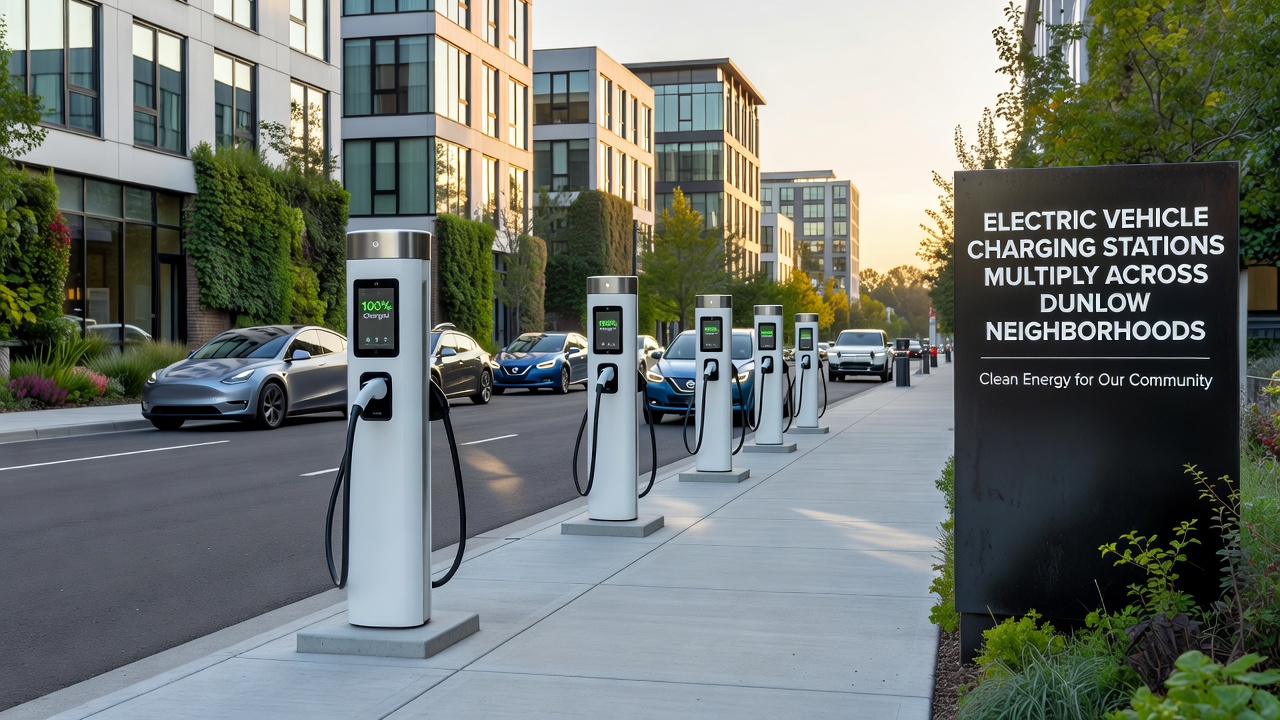
Maintenance crews visit each station on a rotating schedule, checking connectors and software updates every 30 days. Records maintained by the service contractor indicate that downtime has stayed below 3 percent since the first wave of units came online, a rate that matches performance benchmarks reported by the U.S. Department of Energy in its national charging reliability study. Residents who rely on the stations for daily commutes have adapted their routines around real-time availability apps that update every five minutes.
October 2026 Milestones and Future Installations
Planners have scheduled another round of installations for October 2026, targeting the northwest quadrant where current coverage remains thinnest. Permits already approved list eight additional stations, four of which will include 150-kilowatt fast chargers capable of adding 200 miles of range in under 20 minutes. Coordination meetings between the planning office and neighborhood associations have set ground rules that require new units to include weatherproof canopies and LED lighting for evening visibility.
Surveys distributed to 1,200 households in September gathered input on preferred payment methods, and results showed strong preference for contactless options alongside traditional card readers. The same data indicated that 64 percent of respondents expect to own or lease an electric vehicle within the next five years, a projection that aligns with national adoption curves tracked by the International Energy Agency.
Usage Trends and Grid Impact Data
Usage statistics compiled through September 2026 show that the busiest stations handle an average of 28 sessions per day, while quieter neighborhood units average 11. Peak demand occurs between 5:30 and 7:30 p.m. on weekdays, and operators have begun offering time-of-use pricing that discounts off-peak charging after 9 p.m. Grid operators report that the added load has remained within existing capacity margins, partly because many stations incorporate battery storage units that shift demand away from evening peaks.
One study conducted by a regional university engineering department tracked voltage fluctuations at three substations serving Dunlow and found no measurable increase in harmonic distortion after the chargers came online. Researchers presented these findings at a municipal council meeting in early October, noting that similar results have appeared in comparable mid-sized communities that installed chargers on comparable timelines.
Conclusion
The rollout of charging stations continues to follow the timeline established by local and regional partners, with October 2026 marking the next phase of additions in previously underserved blocks. Records kept by the planning office and utility providers document steady growth in both infrastructure count and usage rates, while grid monitoring data shows that system stability has held throughout the expansion. As new units come online, residents gain more options for convenient charging without leaving their immediate neighborhoods.